
Landforms & Landscapes Processes
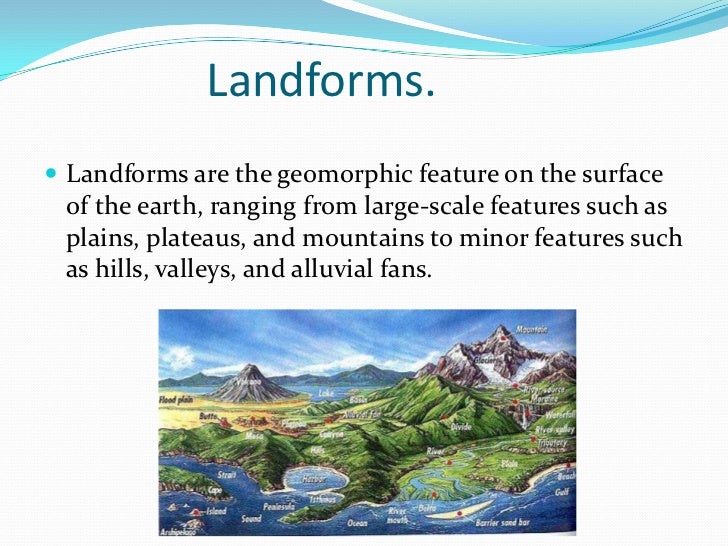
In conclusion, the difference between landform and landscape is significant and should not be overlooked. Landforms refer to the natural features of the earth's surface, such as mountains, valleys, and rivers. On the other hand, landscapes encompass the overall appearance and character of a particular area, including both natural and human.
Mapping Landforms National Geographic Society Teaching geography, Landforms, World geography

A landscape consists of landforms that are characteristic or common to those landscapes. This coastal landscape has landforms like a beach and cliffs. In this desert or semi arid landscape, we can.
45+ Difference Between Landforms And Landscapes

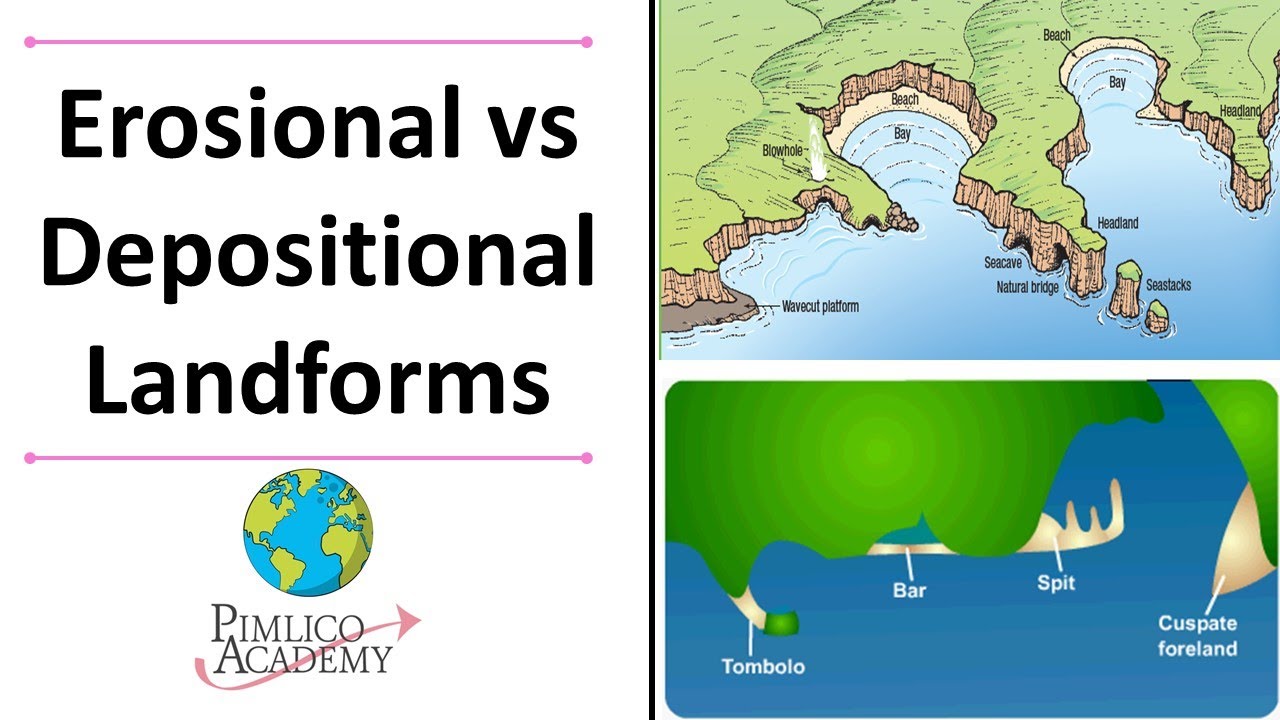
Erosion is the process of soil, rock, and other materials being carried away by natural agents like wind, water, and ice. Deposition is the process of those materials being dropped off in a new location by those same natural agents. Erosion wears away land over time, while deposition builds up new landforms. ( 12 votes)
Difference between erosional and depositional landforms YouTube
As nouns the difference between landform and landscape is that landform is any geological feature, such as a mountain or valley while landscape is a portion of land or territory which the eye can comprehend in a single view, including all the objects it contains. As a verb landscape is create or maintain a landscape.
45+ Difference Between Landforms And Landscapes

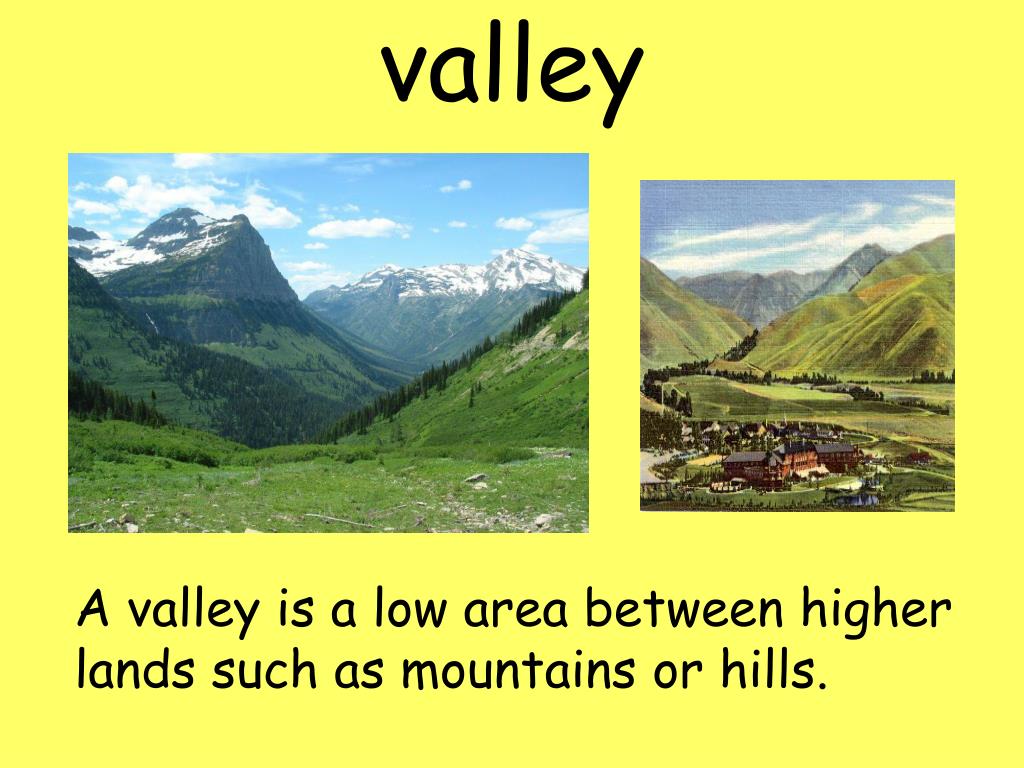
A landform is a feature on Earth 's surface that is part of the terrain. Mountains, hills, plateaus, and plains are the four major types of landforms. Minor landforms include buttes, canyons, valleys, and basins. Tectonic plate movement under Earth can create landforms by pushing up mountains and hills. Erosion by water and wind can wear down land and create landforms like valleys and canyons.
Landscape vs. Landform What’s the Difference?
Landforms are the natural properties and shapes prevalent on the earth's surface. These basically consist of the solid parts of the planet which start from the mountains and end in the ridges in the ocean. That means, everything in between are different types of landforms. With diverse physical characteristics, landforms are spread throughout.
PPT Landforms and Water PowerPoint Presentation, free download ID3087656
5-6, 7-8, 9-10. Discover how Earth's forces have created these landforms and the processes that continue to shape each landscape. Investigate how humans use landscapes and create changes to.
Landform Types Illustration Labeled Geo Premium Vector Freepik Images and Photos finder

Unit 1 Landforms and landscapes Landforms and landscapes The Earth's surface is made up of a vast number of elements that have been brought together to create amazing shapes and formations. To study and understand all these formations, geographers organise them into groups based on characteristics that are similar. These different
River Systems and Fluvial Landforms Geology (U.S. National Park Service)
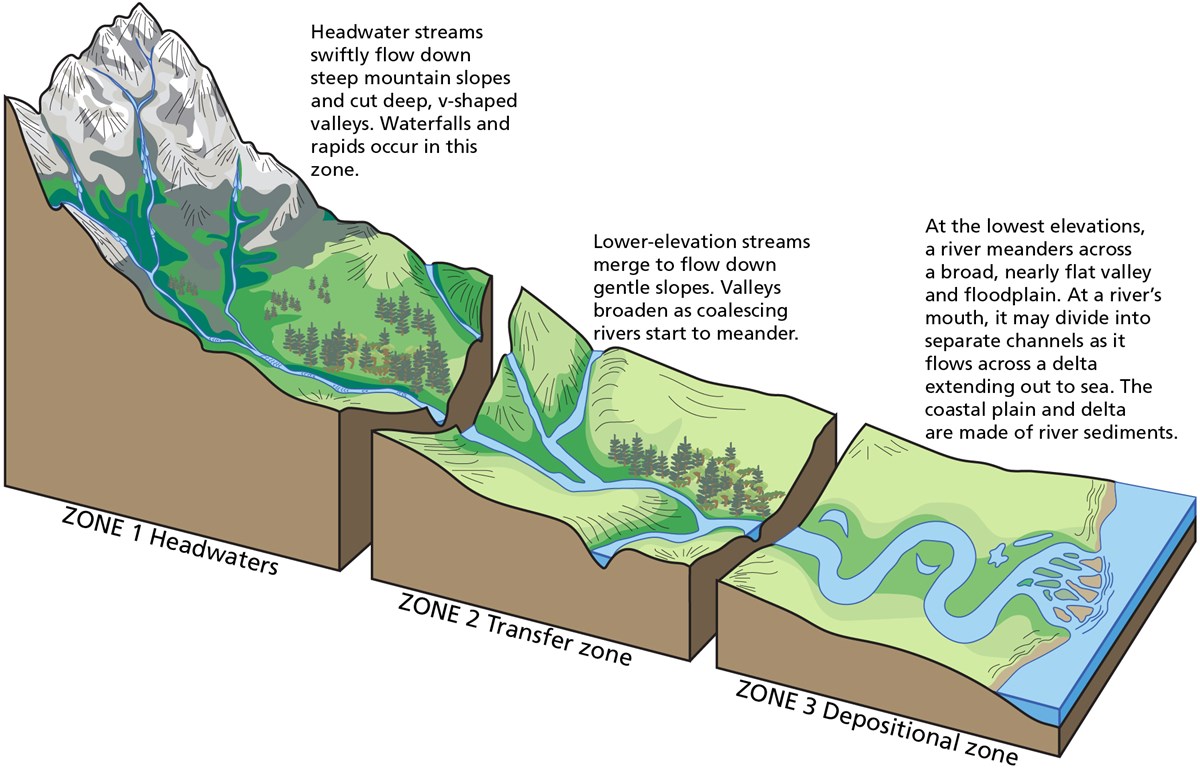
This includes how landforms influence the distribution of plants and animals, as well as human land use. Landforms are the building blocks of landscapes. For example, a mountain range is a landform, while the landscape might include the mountain range along with surrounding forests, rivers, and wildlife, plus human elements like towns and roads.
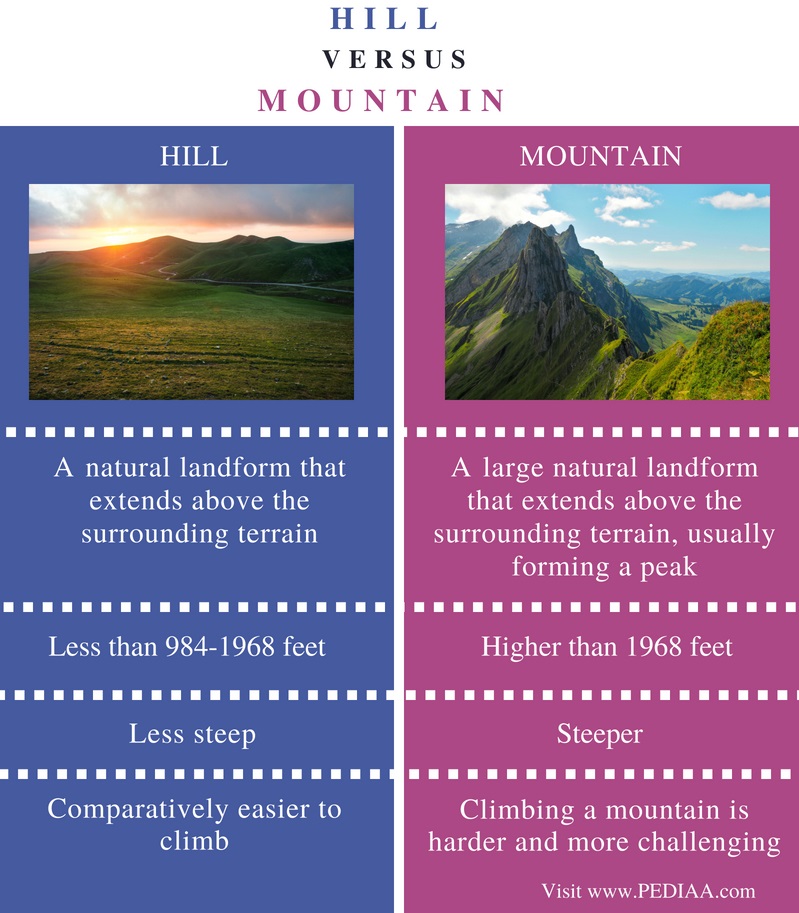
Difference Between Hill and Mountain
What is a landform example? One example of a landform is an island. It can form from (1) sand deposition (e.g., formation of barrier islands parcelling the mainland coast), (2) repeated volcanic.
EL BLOG DE LOS SEXTOS Types of landscapes and landforms
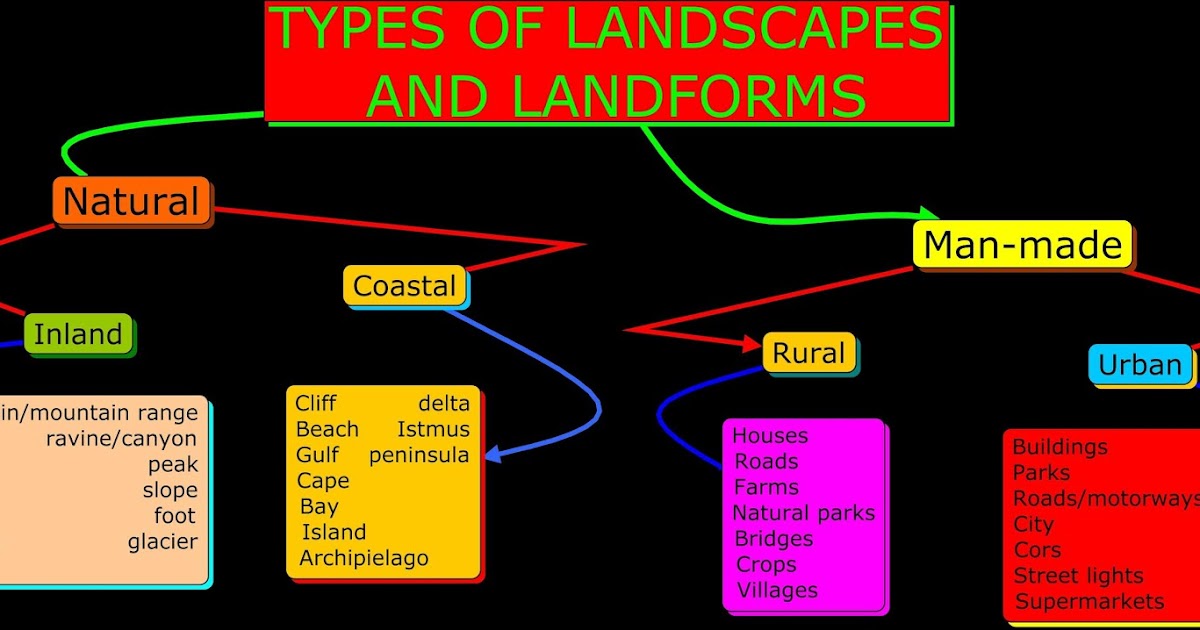
2. You may still be confused between the difference between a landscape and a landform. For example, a desert is a landscape. The things in it which make it look unique are landforms - these are things that shape the land. So a desert may be a landscape but a sand dune is a landform. 3.
Landforms and landscapes YouTube

Types of Depositional Landforms. Depositional landforms are the visible evidence of processes that have deposited sediments or rocks after they were transported by flowing ice or water, wind or gravity. Examples include beaches, deltas, glacial moraines, sand dunes and salt domes. Such landforms can change their shapes over a relatively short.
Landforms by Avery Hauschild

Landforms and Landscapes. Saved by. 284 educators. Search through these resources to discover more about unique landforms and landscapes around the world. Landforms are natural and distinctive features. Explore how they show up in various landscapes. These resources can be used to teach middle schoolers more about the natural world, its.
These are some of the landforms made by river erosion Geography Themes, Geography For Kids

Which landform has a high elevation and a high relief? A) hills B) mountains C) plains. A feature of the landscape is called a _____. A) mountain B) landform C) relief D) plateau. relief. What word describes the difference between the highest and lowest points in an area? A) elevation B) relief C) topography. Elevation _____ is defined as.
Differences Between Hills and Mountains
:max_bytes(150000):strip_icc()/difference-between-hill-and-mountain-4071583_FINAL-5c814b7646e0fb00018bd92d.png)
Chemical weathering is the creation of sediment through chemical means. For example, acid rain can react with rocks, dissolving them. Erosion occurs when water transports sediment from one place to another. For example, a river can carry mud downstream. In general, water has more erosional power when it flows faster and has more volume.
the mountains are covered in green grass and clouds, with text that reads portrait vs landscape

Landforms are natural features that shape the Earth's surface. They are the result of various geological processes and can be found across the planet, encompassing a wide range of shapes, sizes, and formations. Landforms provide valuable insights into the Earth's history and are crucial in understanding the dynamic processes that have shaped.
.