
PPT Introduction to Beam Theory PowerPoint Presentation, free download ID209977
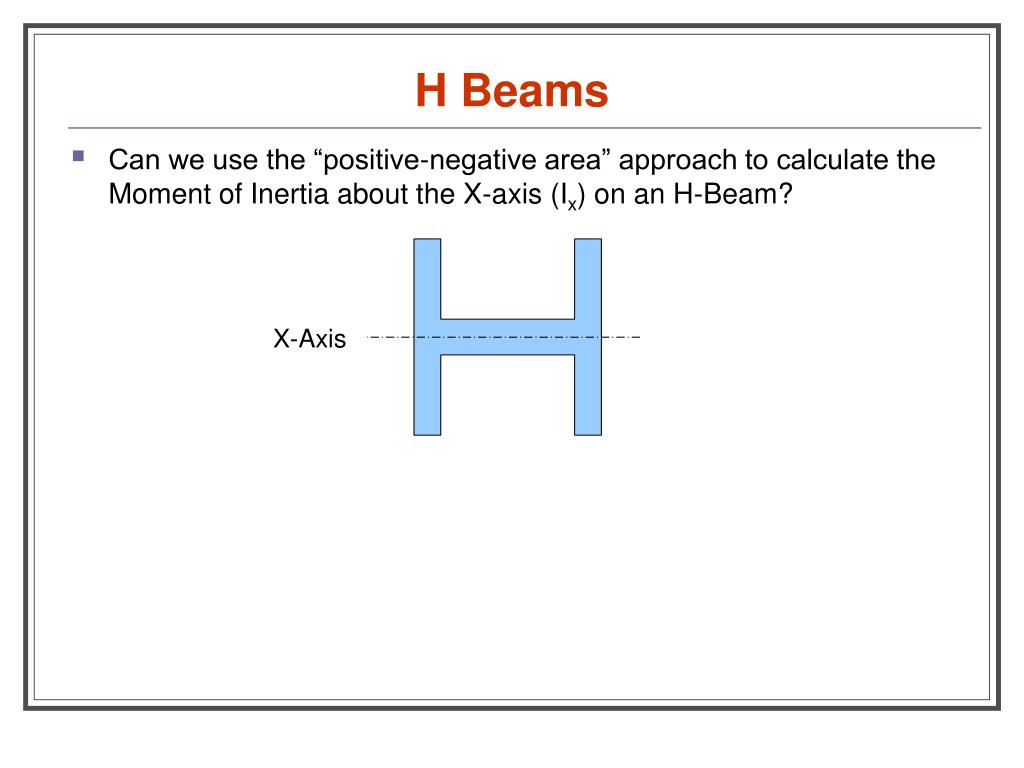
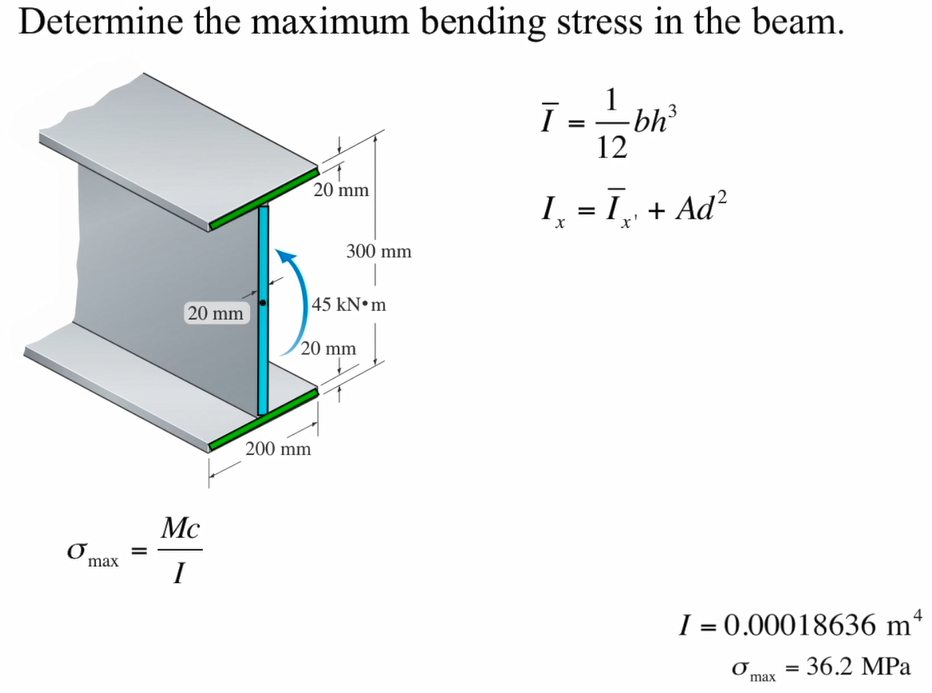
The moment of inertia can be derived as getting the moment of inertia of the parts and applying the transfer formula: I = I 0 + Ad 2. We have a comprehensive article explaining the approach to solving the moment of inertia. Fundamentally, the moment of inertia is the second moment of area, which can be expressed as the following:
Moment of Inertia of I Beam Calculation Example Structural Basics
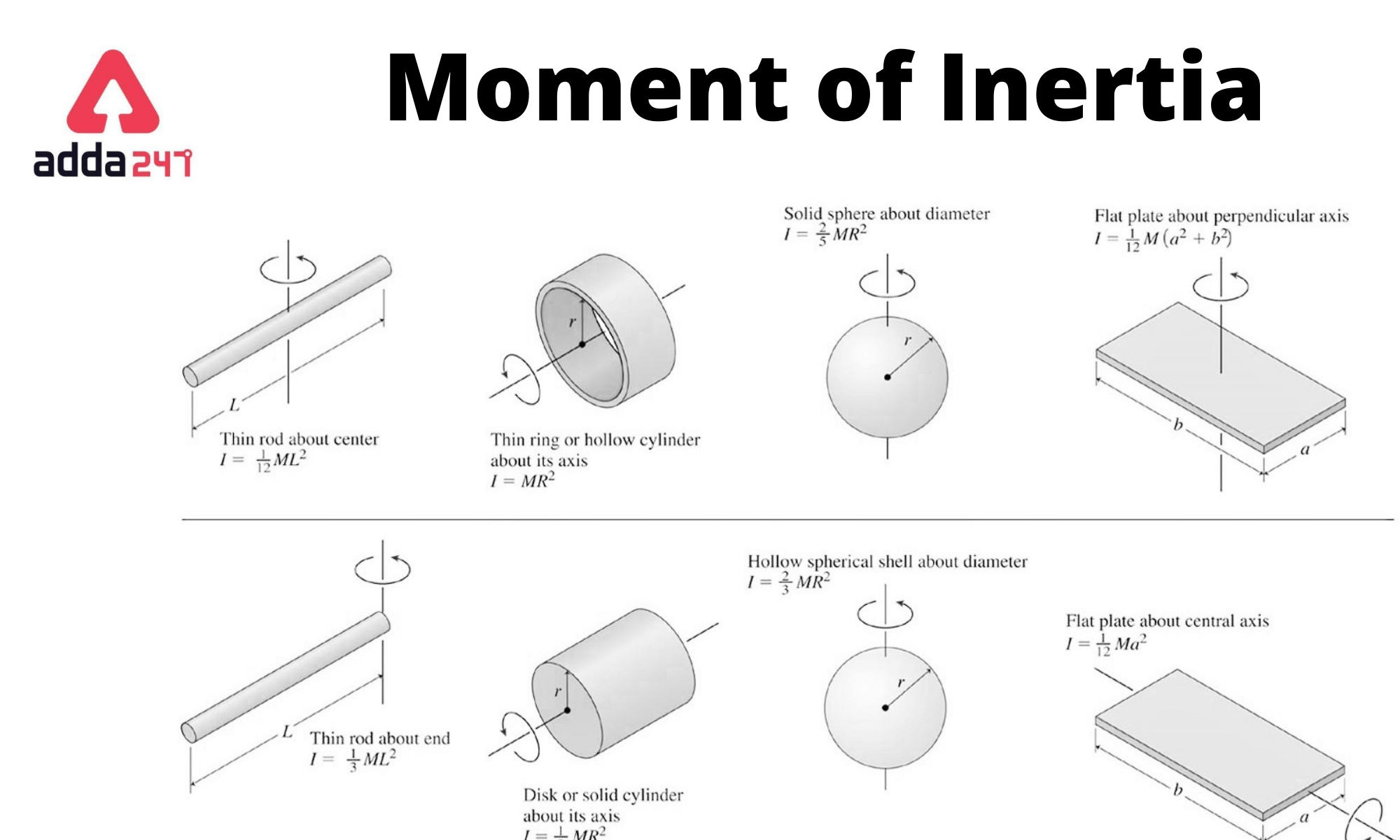
The moment of inertia about one end is 1 3 m L 2 1 3 m L 2, but the moment of inertia through the center of mass along its length is 1 12 m L 2 1 12 m L 2. Example 10.13 Angular Velocity of a Pendulum
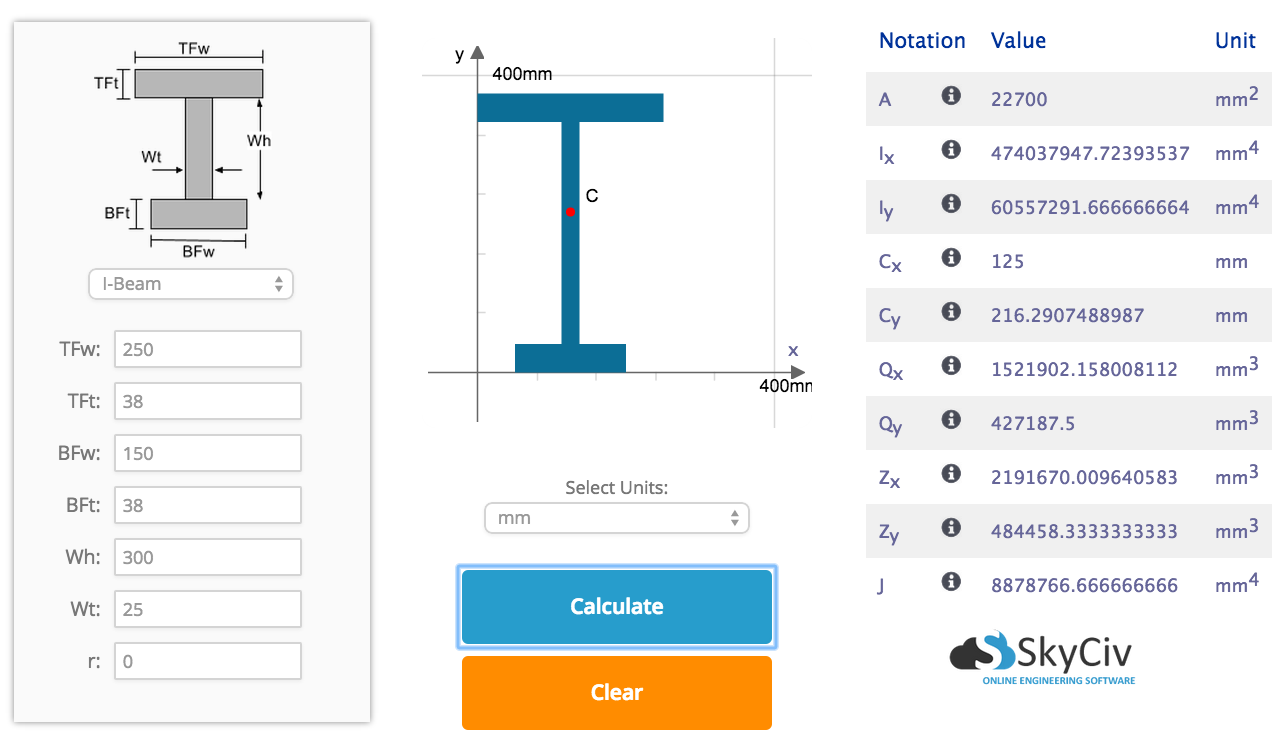
Calculating The Moment of Inertia of Beam Sections SkyCiv
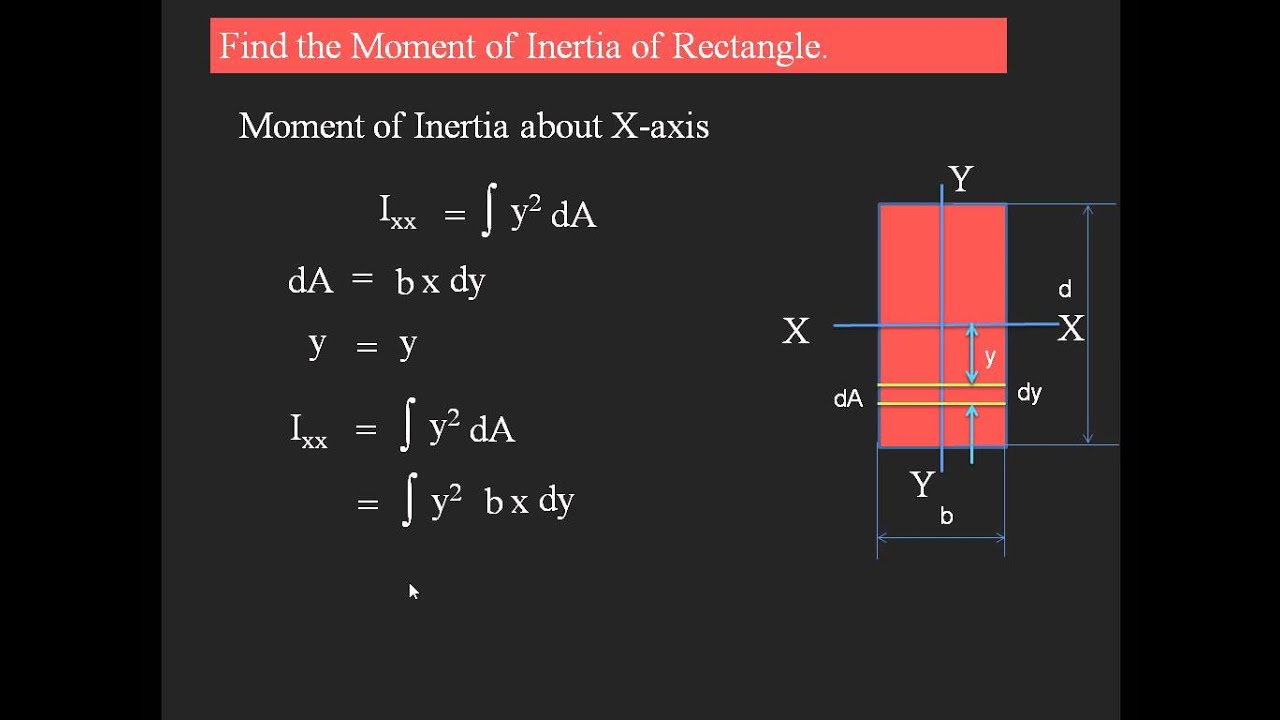
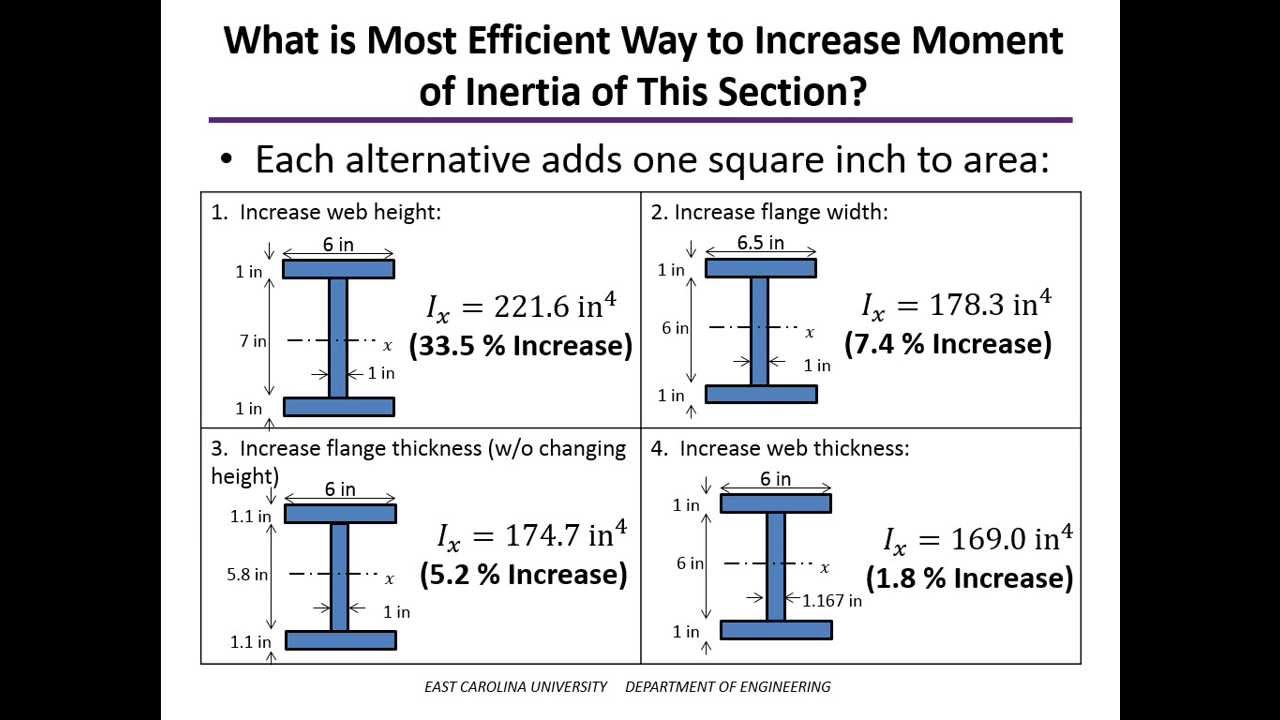
The appearance of \(y^2\) in this relationship is what connects a bending beam to the area moment of inertia. The shape of the beam's cross-section determines how easily the beam bends. A beam with more material farther from the neutral axis will have a larger moment of inertia and be stiffer. Of course, the material of which the beam is made.
H Beam Moment Of Inertia Table The Best Picture Of Beam
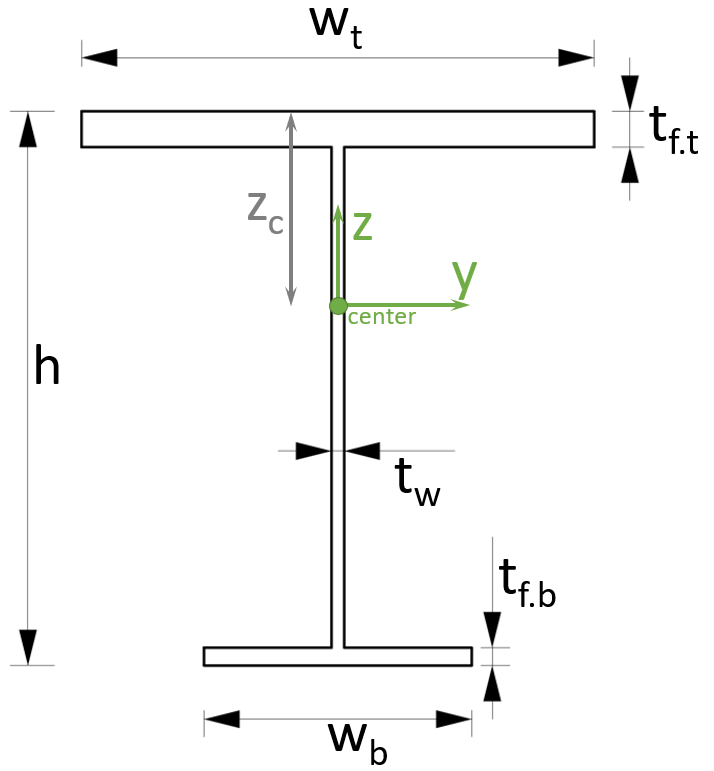
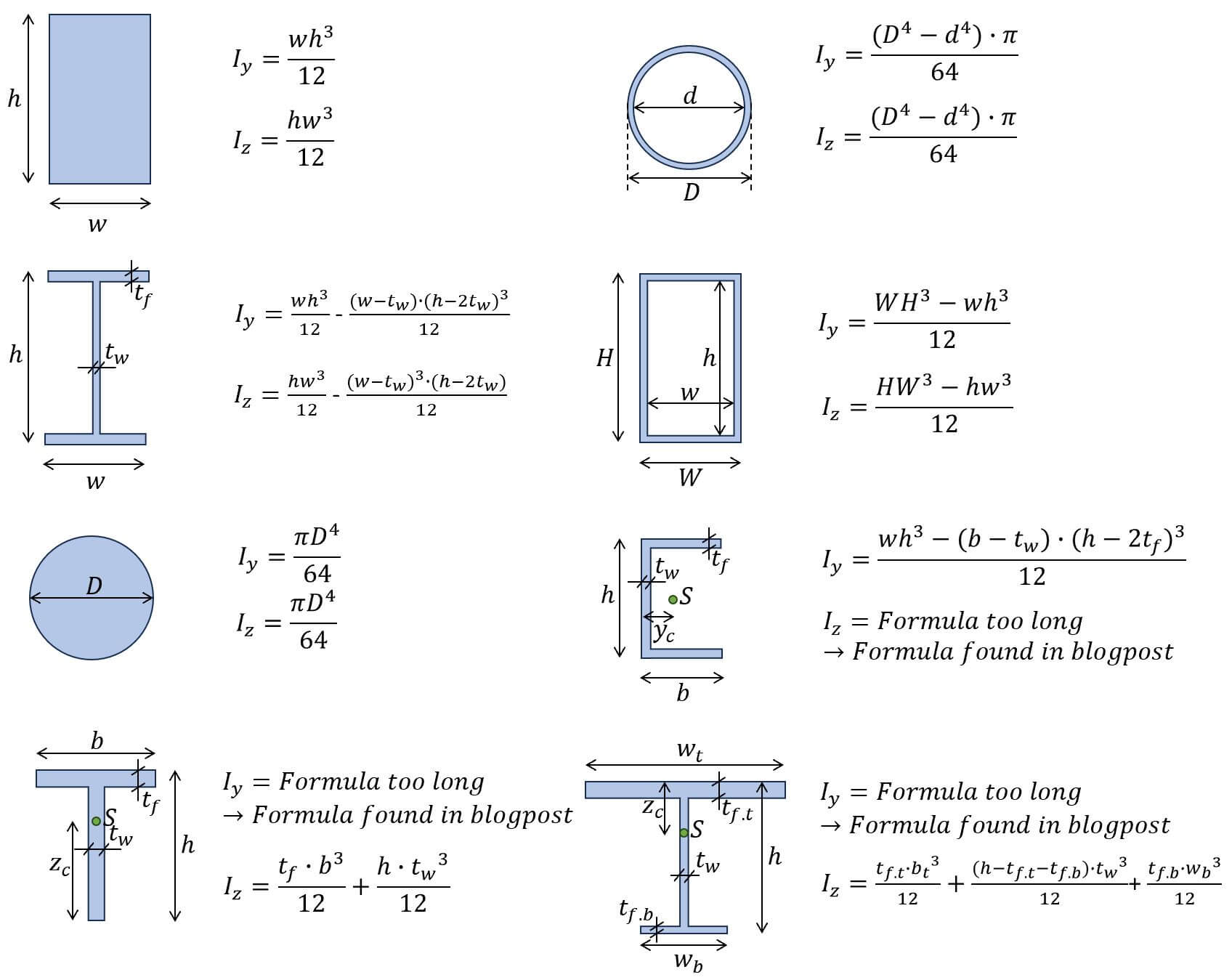
Moment of Inertia. The moment of inertia of an I/H section can be found if the total area is divided into three, smaller subareas, A, B, C, as shown in figure below. The final area, may be considered as the additive combination of A+B+C.. The moment of inertia (second moment or area) is used in beam theory to describe the rigidity of a beam.
Moment Of Inertia For Beam Deflection New Images Beam

The total moment of inertia is just their sum (as we could see in the video): I = i1 + i2 + i3 = 0 + mL^2/4 + mL^2 = 5mL^2/4 = 5ML^2/12. The result is clearly different, and shows you cannot just consider the mass of an object to be concentrated in one point (like you did when you averaged the distance).
I Beam Moment Of Inertia Equation New Images Beam
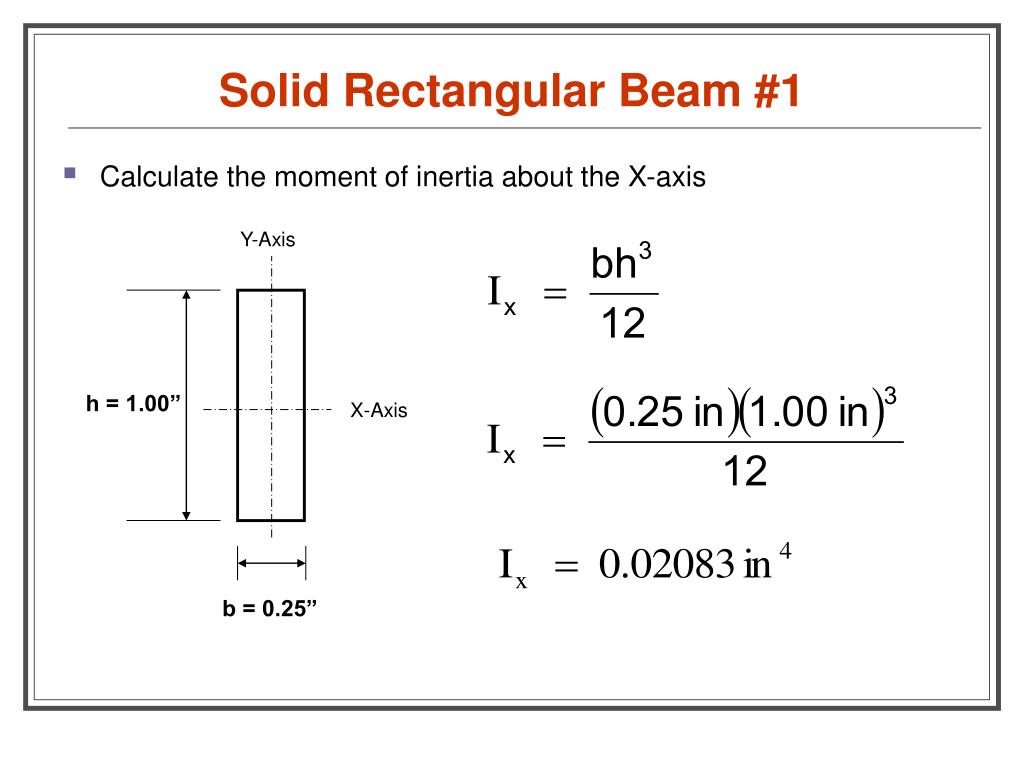
Figure 10.6.3: Calculation of the moment of inertia I for a uniform thin rod about an axis through the center of the rod. We define dm to be a small element of mass making up the rod. The moment of inertia integral is an integral over the mass distribution. However, we know how to integrate over space, not over mass.
Moment of Inertia Definition, Formula, Examples, Unit, Equations
The quantity ∑j mjr2j ∑ j m j r j 2 is the counterpart for mass in the equation for rotational kinetic energy. This is an important new term for rotational motion. This quantity is called the moment of inertia I, with units of kg ⋅m2 kg · m 2: I = ∑j mjr2j. I = ∑ j m j r j 2. 10.17.
Moment Of Inertia Beam Torsional Moment Of Inertia Rectangular Beam New Images Beam
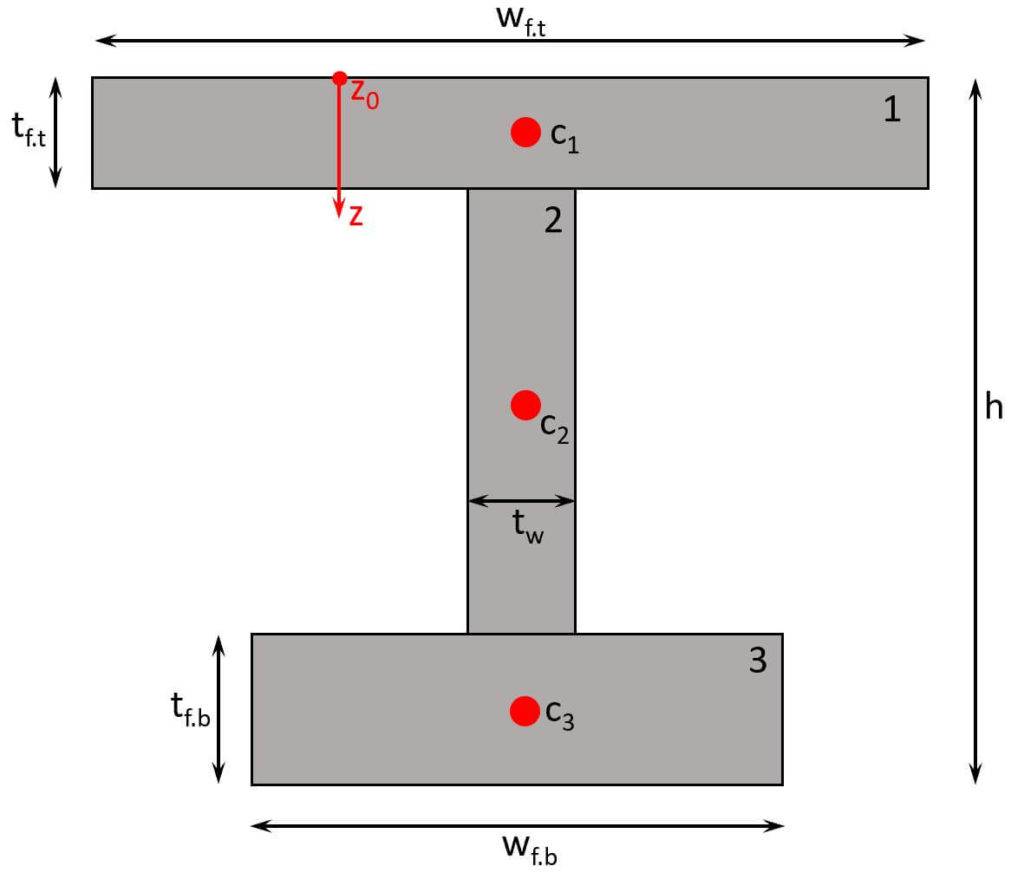
$+w_b \cdot t_{f.b} \cdot(h-\frac{t_{f.b}}{2}))$ Moment of inertia - Weak axis:. Moment of inertia of an I-beam; Moment of inertia calculation; If you are new to structural design, then check out our design tutorials where you can learn how to use the moment of inertia to design structural elements such as.
Moment Of Inertia Formulas For Different Shapes Structural Basics
70282. Daniel W. Baker and William Haynes. Colorado State University via Engineeringstatics. Area moments of inertia are a measure of the distribution of a two-dimensional area around a particular axis. Fundamentally, the portions of a shape which are located farther from the axis are more important than the parts which are closer.
Example of calculating the area moment of inertia on an IBeam Civil Engineering Construction

Step 1: Segment the beam section into parts. When calculating the area moment of inertia, we must calculate the moment of inertia of smaller segments. Try to break them into simple rectangular sections. For instance, consider the I-beam section below, which was also featured in our centroid tutorial. We have chosen to split this section into 3.

The moment of inertia of the beam can be calculated by determining the individual moments of inertia of the three segments.. Find The Neutral Axis. The moment of inertia will be about the neutral axis, which passes through the center of mass. The neutral axis is marked in the above figure, and the location of the center of mass can be calculated as follows:
Moment Of Inertia Formula Beam
Home > Moment of Inertia > I/H section. This tool calculates the moment of inertia I (second moment of area) of an I/H section (also called W-beam or double-T). The flanges are assumed equal. Enter the shape dimensions h, b, t f and t w below. The calculated results will have the same units as your input. Please use consistent units for any input.
Area Moment of Inertia in Beams YouTube

A circle consists of two semi-circles above and below the x x axis, so the moment of inertia of a semi-circle about a diameter on the x x axis is just half of the moment of inertia of a circle. The moment of inertia about the vertical centerline is the same. Ix = I¯y = πr4 8. (10.2.11) (10.2.11) I x = I ¯ y = π r 4 8.
Moment of Inertia Examples YouTube
The first term is the moment of inertia about the center of mass, since x2i +y2i x i 2 + y i 2 is the distance to the center of mass. The second term is h2 h 2 times the total mass of the object, since the sum of all the mi m i is just the mass, M M, of the object. Now consider the term: −2x0∑i mixi − 2 x 0 ∑ i m i x i.
Moment Of Inertia Beam Torsional Moment Of Inertia Rectangular Beam New Images Beam
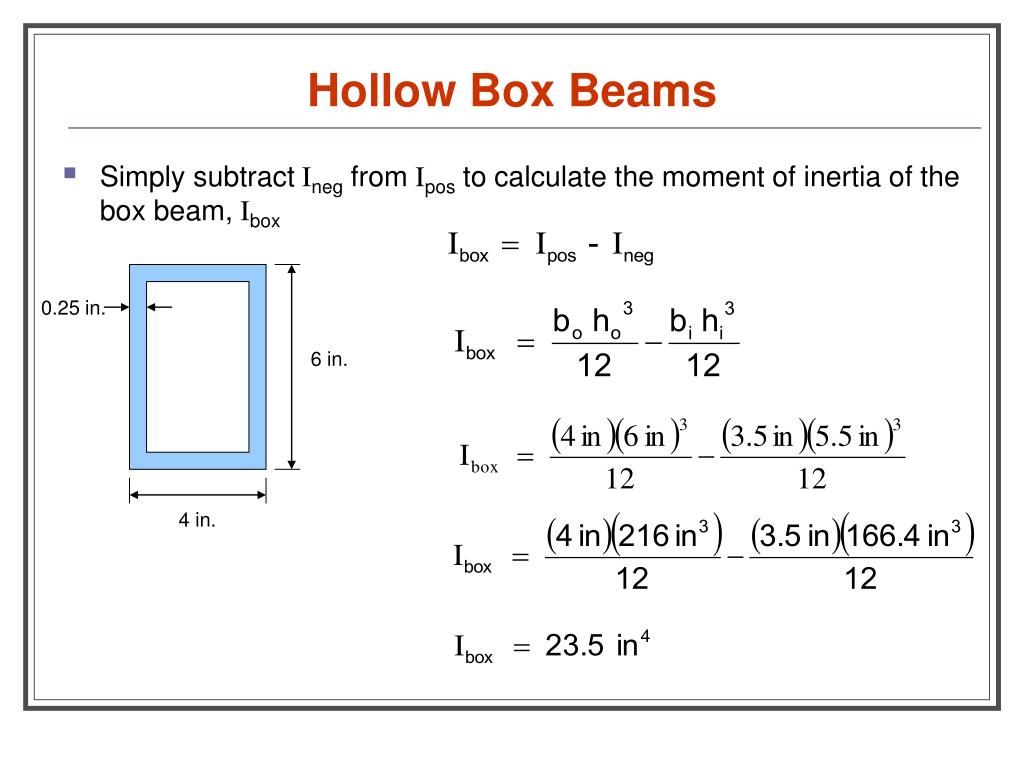
Area Moment of Inertia or Moment of Inertia for an Area - also known as Second Moment of Area - I, is a property of shape that is used to predict deflection, bending and stress in beams.. Area Moment of Inertia - Imperial units. inches 4; Area Moment of Inertia - Metric units. mm 4; cm 4; m 4; Converting between Units. 1 cm 4 = 10-8 m 4 = 10 4 mm 4; 1 in 4 = 4.16x10 5 mm 4 = 41.6 cm 4.
Moments of Inertia
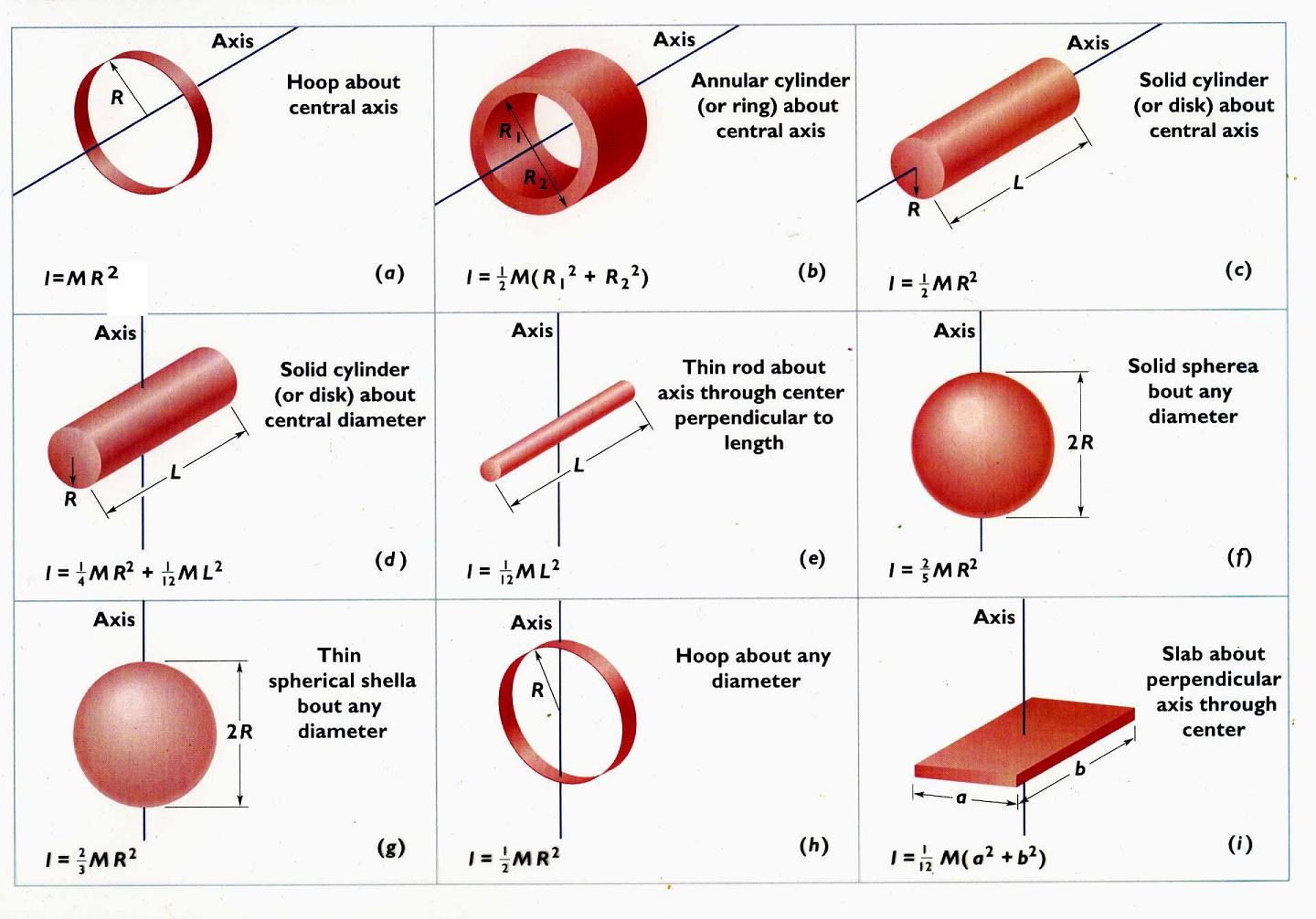
The moment of inertia, otherwise known as the mass moment of inertia, angular/rotational mass, second moment of mass, or most accurately, rotational inertia, of a rigid body is a quantity that determines the torque needed for a desired angular acceleration about a rotational axis, akin to how mass determines the force needed for a desired acceleration..
.